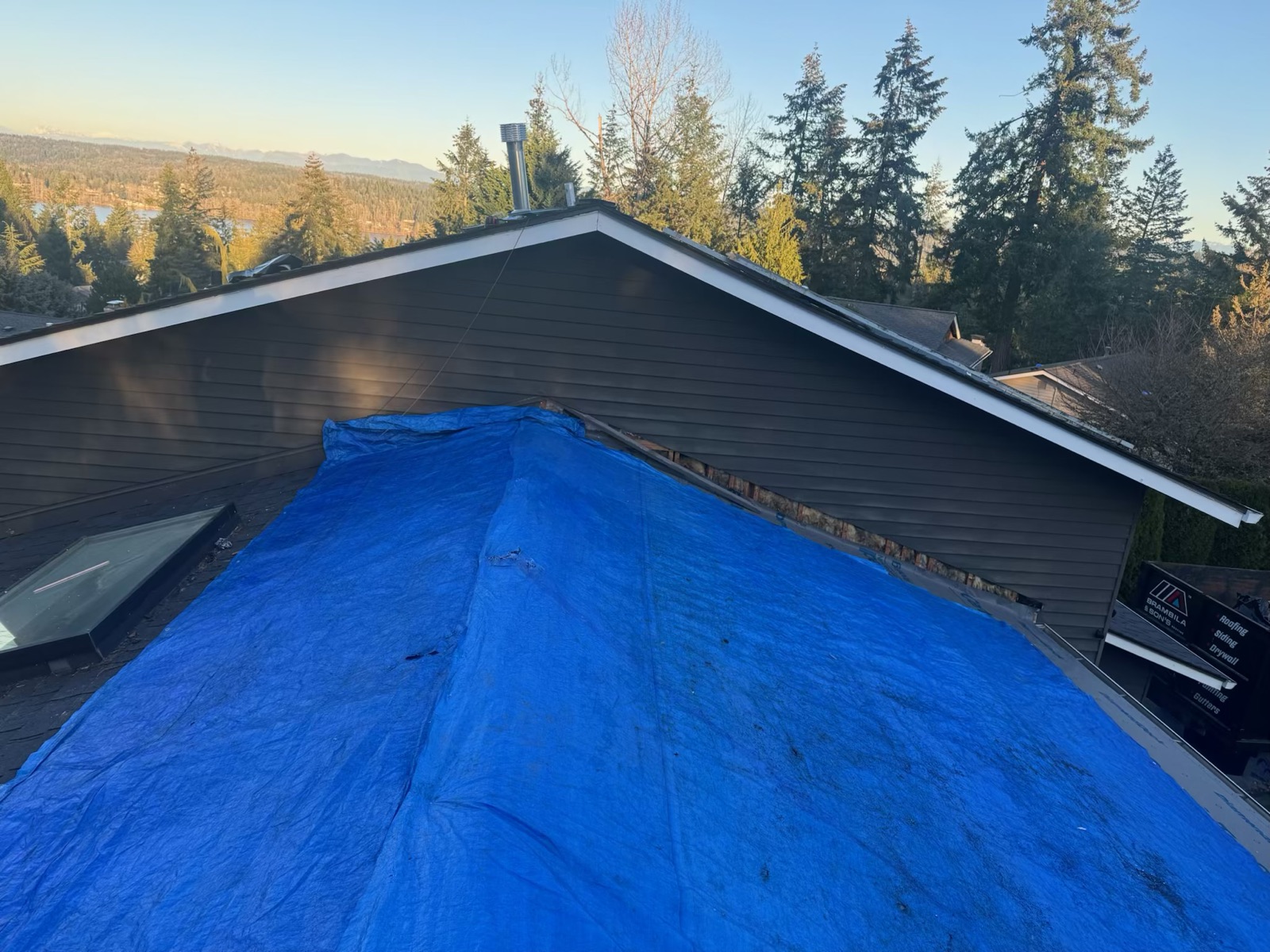
Quick answer: After a windstorm, stay away from downed power lines, check your roof from the ground instead of climbing on it, and take photos of anything that looks wrong. If you find damage, stop any active leak, call your insurance company, and have a roofer inspect it.
Is it safe to go outside and check my roof after a windstorm?
Only once you know there are no downed lines nearby. The National Weather Service is blunt about this: do not go near downed power lines, and report them to the police. It also says to be careful when handling debris that blew into your yard.
The Asphalt Roofing Manufacturers Association (ARMA) adds that property owners should take precaution when surveying damage, especially where trees have taken down power lines.
How do I check my roof for wind damage without climbing on it?
Look from the ground or through an upstairs window. ARMA recommends a visual inspection from the ground after storm events, and says binoculars are a good tool for it. It also says homeowners should not climb onto their roofs, and that this should only be done by professionals.
That matters most right after a storm. Do not climb on a roof that is wet, steep, or damaged. From the ground, check for:
- Missing or broken shingles, or shingles lying in the yard
- Shingle tabs that look lifted or loose
- Flashing that is bent or pulled away where the roof meets a wall, and around skylights, vent pipes, and the chimney. ARMA notes these are the places leaks can occur.
- Branches on the roof or in the gutters
- Gutters that are hanging loose or packed with debris
Take photos of everything you see, even from a distance.
What should I check inside the house after a windstorm?
Check the attic and the ceilings for water. ARMA recommends inspecting the underside of the roof deck from the attic, and looking carefully at the flashing points, which it calls the most vulnerable points on a roof.
- Shine a flashlight on the underside of the roof deck. ARMA notes that active leaks can show up this way during a rainstorm.
- Look at interior walls and ceilings for new stains or water damage.
What should I do if the roof is leaking after the storm?
Protect the inside of the house first, then get the roof covered. Move what you can, catch the water, and follow the steps in what to do when your roof is leaking.
The Washington Office of the Insurance Commissioner says you may make emergency repairs, such as covering a damaged roof, and that you should keep your receipts for any repair materials like plywood or tarps. Covering a roof means getting on it, so leave that part to a roofer. We handle emergency work through our roof repair service.
Should I call my insurance company about wind damage to my roof?
Yes, if you found damage. Whether it is covered depends on your policy, but the Insurance Commissioner's steps after a loss are the same either way:
- Contact your agent or insurer and ask what information they need.
- Be ready to provide receipts, photos, or other documentation to prove your loss.
- Keep copies of everything.
- Expect an inspection. The office says the insurer should inspect the damage within 30 days of your filing, and may do it with photos or a virtual inspection.
- Know that you can choose your own contractor, even if the insurer recommends one.
- If a contractor asks you to sign an assignment of benefits, talk to your agent or insurer first.
We document storm damage with photos and work with the insurance carrier on covered claims. More on how that works is on our insurance claims page and in our guide to whether insurance covers roof replacement in Washington.
Can wind damage be repaired, or do I need a new roof?
Often it can be repaired. ARMA says asphalt shingle roofs are repairable, including resealing shingles damaged by high winds and replacing shingles punctured by windborne debris. It also notes that a roofing cement patch over a puncture is not a suitable long-term repair.
The line ARMA draws is simple. A few missing or broken shingles should be replaced individually. More widespread loss or damage may indicate a need for reroofing. Our guide on roof repair or replacement covers how to tell which side you are on.
How do I choose a roofer after a storm?
Take your time, even if the roof needs attention fast. In storm guidance shared by ARMA, the National Roofing Contractors Association says to look for a contractor who:
- Has a permanent place of business
- Can show a license and is bonded
- Carries general liability insurance
- Can provide references from recent clients
- Gives you a written proposal
How do I get my roof ready for the next windstorm?
Deal with the small things before the wind does. ARMA's pre-storm checklist is short:
- Cut back branches that scrape against or hang over the roof.
- Clean out gutters and roof valleys so they are not clogged with leaves and branches.
- Have the roof evaluated and get repairs made as soon as possible.
If the last storm left you wondering about your roof, we will come look and show you what we found. Request your free estimate here, or see a ballpark replacement price in seconds with our roof cost calculator.
BSR Constructions LLC is a family-owned, licensed and insured Seattle roofing contractor rated 4.9 stars on Google, and a GAF Certified Plus contractor. Every roof we install is backed by our 10-year workmanship warranty. Call (206) 656-4999 for a free roof inspection.