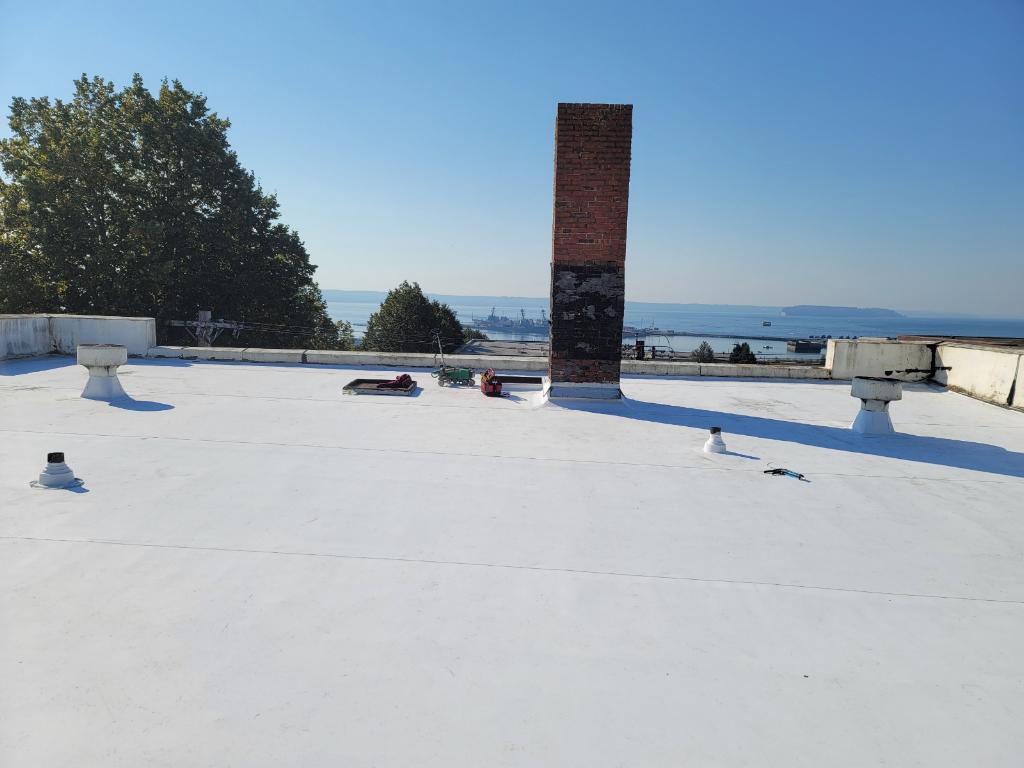
Quick answer: Yes, if the water is still there two days after the rain stops. The Asphalt Roofing Manufacturers Association (ARMA) defines ponding water as water that remains on a roof 48 hours or longer, and it says ponding may lead to faster wear of the roof surface.
What counts as ponding water on a flat roof?
Water that is still on the roof 48 hours or longer after it arrived. That is the definition ARMA uses.
A flat roof that is wet right after a storm is normal. A puddle that is gone the next day is normal too. The puddle that is still there two days later is the one to worry about. In a Seattle winter, when the rain may not stop for 48 hours, look at where the water collects and how deep it gets. The same low spots will show up every time.
Is ponding water bad for a flat roof?
Yes. ARMA says ponding water may lead to accelerated erosion and deterioration of the membrane surface. It lists four specific problems:
- Stress on the deck. Ponding can substantially increase the load on the roof deck and deform it.
- Damage to the surface. When ponded water freezes, moving ice can scrub the membrane.
- Algae and plants. Growth in the wet area may damage the membrane and clog drains.
- Dirt and debris. Contaminants settle where the water sits and can damage the membrane surface.
What causes water to pond on a flat roof?
Not enough slope, or a drain that is not doing its job. ARMA notes the water itself can come from rain, snow, or runoff from rooftop equipment.
These are the usual places we find it:
- Low spots between two drains
- The uphill side of rooftop equipment, where a unit blocks the flow
- Around drains and scuppers that are clogged with leaves, dirt, or growth
- Areas where the deck has sagged
How much slope should a flat roof have?
At least 1/4 inch per foot. That is the minimum ARMA recommends, and it notes that model building codes require the same minimum slope for new construction and require positive drainage on reroofing projects.
A flat roof is never supposed to be perfectly flat. According to ARMA, the National Roofing Contractors Association (NRCA) recommends that designers provide positive slope, and it lists the ways to get it: sloping the framing or the deck, designing a tapered insulation system, placing drains, scuppers, and gutters correctly, or a mix of these.
How do you fix ponding water on a flat roof?
You fix the cause, which is either blocked drainage or missing slope. The right repair depends on which one it is.
| Cause | Typical fix |
|---|---|
| Clogged drain or scupper | Clear it and keep it on a cleaning schedule |
| Low spot between drains | Build a saddle to push water toward the drains |
| Water trapped behind rooftop equipment | Build a cricket on the uphill side |
| No drain where the water collects | Add a drain or scupper |
| Deck with too little slope | Add tapered insulation when the roof is replaced |
Crickets, saddles, tapered insulation, and added drains are all fixes ARMA describes. ARMA also points out that local plumbing codes may require secondary, or emergency, drains.
The cost depends on the cause and the size of the area, so we look at the roof before we give a number.
Will a new flat roof fix ponding water?
Only if the drainage is fixed with it. A new membrane laid over the same low spots will pond in the same places.
A reroof is the best time to correct slope, because tapered insulation can go down before the new membrane. Ask every roofer how their quote handles drainage. If you are weighing materials, see our comparison of TPO, PVC, and torch down. In Seattle, a re-roof on a commercial or multifamily building needs a permit from the Seattle Department of Construction and Inspections. Our Seattle roof permit guide has the details.
What should I do if I see standing water on my roof?
Check it again 48 hours after the rain stops. If the water is still there, do these three things:
- Take photos that show where the water sits and roughly how big the area is.
- Look at the drains and scuppers from a safe spot. If they are packed with debris, that may be the whole problem.
- Look inside. Check the ceiling below the wet area for stains.
Do not walk a wet roof if you do not have safe access. Send us the photos and we will come out and take a look.
When should I call a roofer about ponding water?
Call when water is still on the roof after 48 hours, when the same spots fill every time it rains, or when you see a stain on the ceiling below. Waiting gives the water more time to wear the surface.
We repair and replace TPO, PVC, and torch down roofs on commercial and multi-family buildings and on low-slope sections of homes. See our commercial roofing page, then request your free estimate or call (206) 656-4999.
BSR Constructions LLC is a family-owned, licensed and insured Seattle roofing contractor rated 4.9 stars on Google. We repair and replace flat roofs, estimates are free, and our work comes with a 10-year workmanship warranty. Call (206) 656-4999.